
Richtlinien für die Neutranskription (Stand 01.04.2020)
-
Zu den Neutranskriptionen
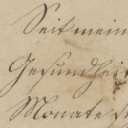
Die Handschrift wird in einer diplomatischen Transkription wiedergegeben, d.h. historische und individuelle Schreibungen in Orthographie und Zeichensetzung werden beibehalten. Emendiert wird nicht; Schreibversehen werden nicht korrigiert. Kustoden allerdings werden nicht wiedergegeben. Da der Leser zu jeder transkribierten Handschrift das Digitalisat einsehen kann, wird auf eine topographisch exakte Transkription (Wiedergabe des Zeilenfalls, nachgeahmte Positionierung der Datums- und Unterschriftszeile etc.) verzichtet.
Geminations- und Nasalstriche werden aufgelöst.
Das ÿ der Kurrentschrift erscheint als y.
Doppelte Trenn- und Bindestriche werden als einfache dargestellt. Ebenso werden mit öffnenden Anführungszeichen dargestellte Bindestriche („) mit dem heutigen Bindestrich wiedergegeben.
Historische Klammerformen werden in der heutigen Schreibweise dargestellt.
Ligaturen (Suspensionsschlingen und Endhaken) werden nicht aufgelöst, sondern mit Punkt abgekürzt.
Abgekürzte Währungen werden im Mouseover erläutert.
Abkürzungen mit Punkt oder Doppelpunkt werden beibehalten.
Verschleifungen werden stillschweigend aufgelöst.
Endverschleifungen und Endhaken, die nicht für eine Abkürzung stehen, werden nicht wiedergegeben. Ein Punkt wird nur dort gesetzt, wo in der Handschrift ein Punkt erkennbar ist.
I und J werden von den Schreibern in der Kurrentschrift häufig nicht deutlich unterschieden. In der Transkription wird vor einem Vokal ein J gesetzt (Jahr, Jena, Jura etc.) und vor einem Konsonanten ein I (Ich, Ihr etc.). In lateinischer Schrift allerdings wird die Schreibung des Originals beibehalten (Ius, Ianuar, Iuny etc.).
Einzelne Worte oder Wortfolgen in lateinischer Schrift sind typographisch von der Kurrentschrift abgesetzt. Auch ganze Briefe in lateinischer Schrift – also alle französisch- und englischsprachigen Briefe – werden typographisch abgesetzt.
Während die Kurrentschrift in Georgia Times New Roman dargestellt ist, erscheint die lateinische Schrift in Calibri.
Getrennt- und Zusammenschreibungen sind nicht immer eindeutig zu unterscheiden. Entschieden wird in Zweifelsfällen nach den Gewohnheiten des jeweiligen Schreibers.
Randbeschriftungen des Schreibers sind im Fließtext farblich abgesetzt (schattiert) gekennzeichnet. Über den Mauszeiger wird sichtbar, dass es sich um eine Randbeschriftung handelt („Notiz zur Transkription: Randbeschriftung“); bei mehreren Schreibern werden die Namen in Klammern ergänzt.
Einfügungen des Schreibers, die mit einem Einfügungszeichen gekennzeichnet und am Blattrand oder -ende (als Fußnoten) vermerkt sind, werden mittels eines Sternchens (*) angezeigt und gleichfalls im Fließtext farblich abgesetzt (schattiert) wiedergegeben. Über den Mauszeiger wird die Art der Einfügung angegeben („Notiz zur Transkription: Einfügung am linken Blattrand“, „Einfügung am unteren Blattrand“ etc.).
Durchgestrichener Text wird nur ausnahmsweise wiedergegeben und zwar durchgestrichen (durchgestrichener Text).
Einfügungen des Schreibers im Fließtext werden hochgestellt wiedergegeben: eingefügter Text.
Wiedergegebene Durchstreichungen mit Überschreibung werden durch das durchgestrichene Wort/die durchgestrichenen Wörter und ein anschließend hochgestelltes Wort/anschließend hochgestellte Wörter dargestellt: durchgestrichener Text Überschreibung.
Unterstreichungen werden als solche wiedergegeben.
Notizen des Empfängers sind durch schattierte Schrift wiedergegeben; der Mauszeiger erklärt die Schattierung („Notiz zur Transkription: Notiz des Empfängers“).
Es werden nicht alle archivarischen Spuren auf der Handschrift wiedergegeben. Erschlossene Ortsangaben, die von einem Dritten auf der Handschrift vermerkt wurden, werden in den Metadaten angegeben, ebenso Besitzervermerke.
Bei Textverlust infolge schadhaften Papiers (Wasserschaden, Schimmel, Siegelausriss etc.) oder Ausbleichung der Tinte werden annähernd zweifelsfrei zu lesende Stellen in eckigen Klammern ergänzt. Der Mauszeiger gibt die Ursache des Textverlusts an („Notiz zur Transkription: Textverlust durch Wasserschaden“ etc.).
Nicht zu erschließender Textverlust wird durch […] kenntlich gemacht. Auch in diesem Fall wird die Ursache des Textverlusts durch den Mauszeiger angegeben.
Unsichere Lesungen sind schattiert wiedergegeben. Der Mauszeiger gibt die unsichere Lesung an: „Notiz zur Transkription: Unsichere Lesung“.
Nicht lesbare Stellen werden durch ein schattiertes x pro Buchstabe kenntlich gemacht. Ist ein ganzes Wort nicht lesbar oder ist die Anzahl der unleserlichen Zeichen nicht zu ermitteln, wird die Stelle mit schattiertem xxx dargestellt. Im Mouseover ist „nicht entziffert“ angegeben.
Die Seiten der Handschrift sind fortlaufend und in eckigen Klammern angegeben ([1] [2] [3] usw.); sie sind als Paginierungen des Editors ausgezeichnet. Der Mauszeiger macht die Paginierung sichtbar: „Notiz zur Transkription: Paginierung des Editors“.
Paginierungen des Schreibers werden durch schattierte Schrift sowie den Mauszeiger „Notiz zur Transkription: Paginierung des Schreibers“ angegeben.